
Glycine – Food Additive
 Whisper Group
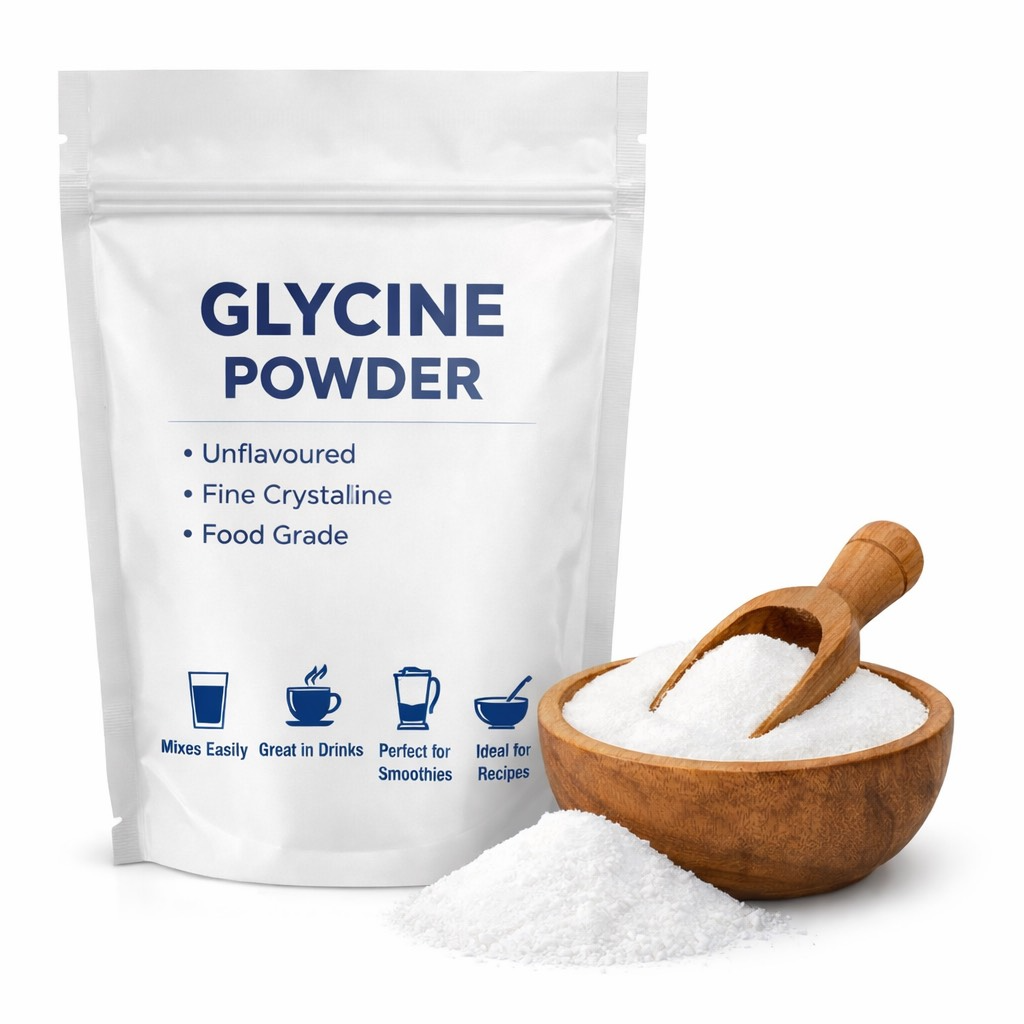
Product Characteristics:
White crystalline granules or powder with a sweet taste.
Relative density: 1.1607; melting point: 248°C (decomposes).
Easily soluble in water; slightly soluble in methanol; very sparingly soluble in ethanol; almost insoluble in acetone and diethyl ether.
Food Applications:
Used as a flavoring agent, sweetener, and nutritional supplement;
Used in combination with DL-alanine, citric acid, and similar substances in alcohol-containing beverages;;
Serves as an acidity corrector and buffering agent during the synthesis of sake;
Used as an additive during the preparation of pickles, sweet bean paste, soy sauce, vinegar, and fruit juices to enhance flavor and taste, preserve original characteristics, serve as a source of sweetness, and for other purposes.
Adding this to butter, cheese, or margarine can extend their shelf life by 3 to 4 times.
It exerts a certain inhibitory effect on the proliferation of Bacillus subtilis and Escherichia coli; therefore, it can be utilized as a preservative in surimi products, peanut butter, and similar items, at an inclusion level of 1% to 2%.
Glycine is a zwitterion containing both an amino group and a carboxyl group; consequently, it possesses strong buffering properties and acts as a buffer for the taste sensations associated with substances such as table salt and vinegar.
Inclusion rate for processed meat products and heat-treated meat products: 3 g/kg;
The recommended addition level is 0.3%–0.7% for salted products and 0.05%–0.5% for pickled products.