
Glycine – Pharmaceutical Applications
 Whisper Group
Mainly used in medical microbiology and biochemical amino acid metabolism research.
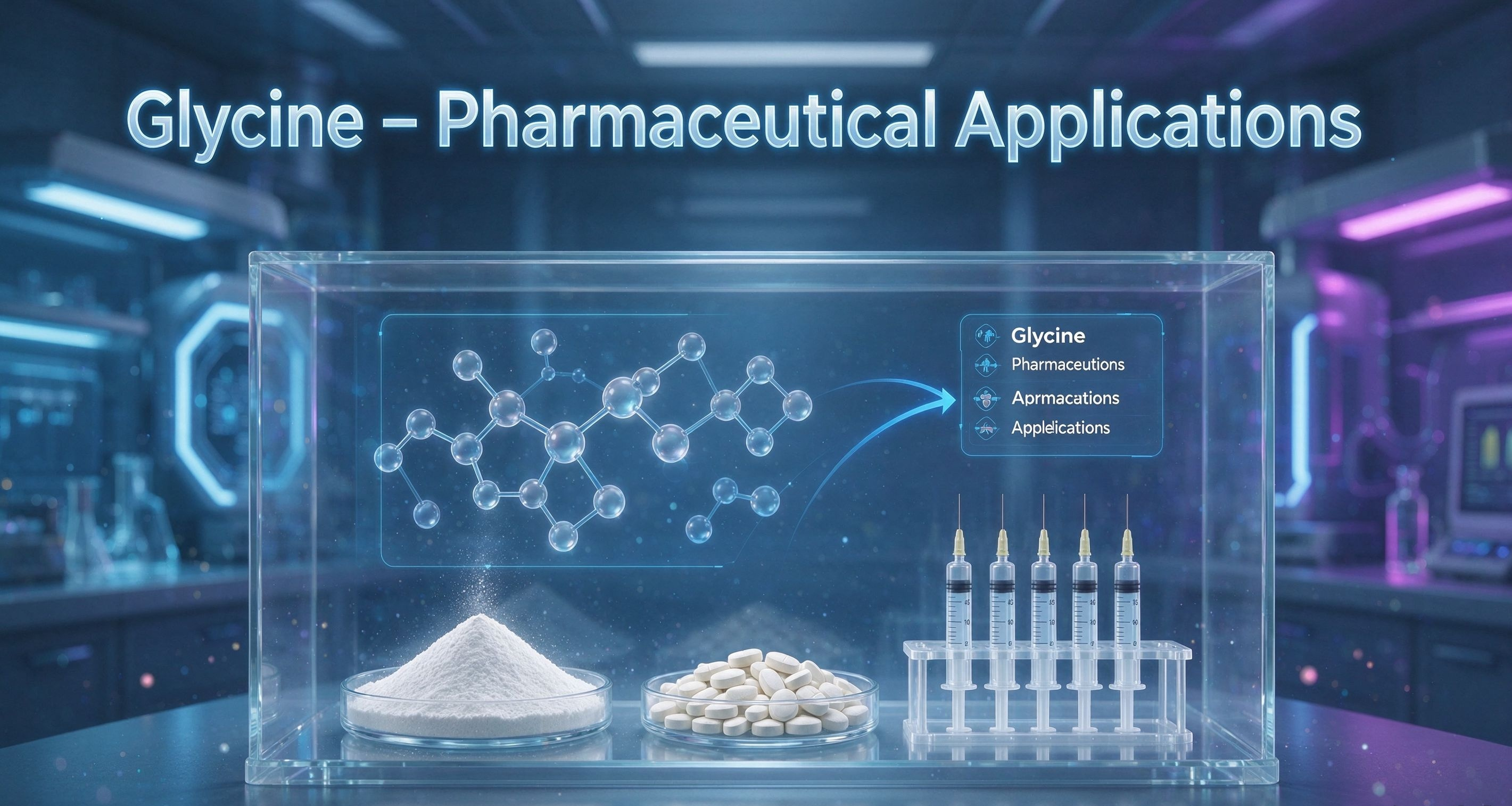
Product Characteristics:
White crystalline granules or powder with a sweet taste.
Relative density: 1.1607; melting point: 248°C (decomposes).
Easily soluble in water; slightly soluble in methanol; very sparingly soluble in ethanol; almost insoluble in acetone and diethyl ether.
Medicinal Uses:
Used as a reagent in the study of microbial metabolism and amino acid biochemistry;
Used as a buffering agent for chlortetracycline, and as a raw material for the synthesis of the anti-Parkinson's drug L-Dopa, Vitamin B6, and various amino acids such as threonine;
Used in amino acid-based nutritional infusions;
Used as a raw material for cephalosporins, an intermediate for thiamphenicol, and an intermediate for the synthesis of imidazoleacetic acid, among others;
Used as a raw material in cosmetic products;
Used as an adjuvant therapy for progressive muscular dystrophy and pseudohypertrophic muscular dystrophy;
Used to treat nervous hyperacidity and to suppress excessive gastric acid secretion associated with gastric ulcers;
Used for bladder irrigation during surgical procedures.